
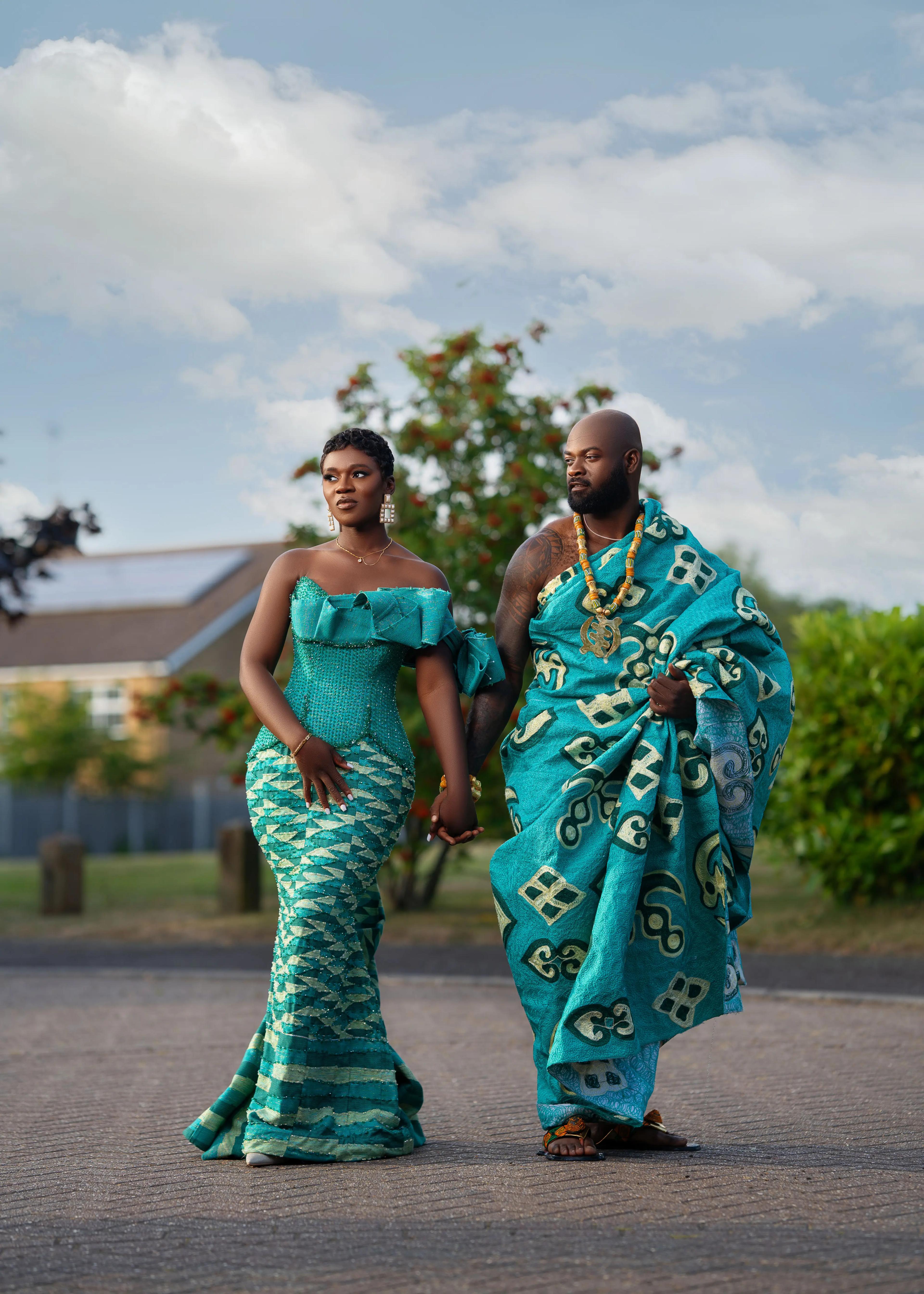
Many of the couples we work with hold two celebrations: a traditional ceremony that honours their families and heritage, and a white wedding with a church or civil ceremony. Some fit both into one long day; others spread them across two days, or even two weekends. As an African and traditional wedding photographer based in Telford, we're often asked what a realistic two-day plan looks like. This guide sets out an example timeline for each day, with notes on where photography and film fit in.
The times below are a starting point, not a rule. Every family, tradition and venue runs to its own rhythm, so treat this as a template to adapt with your families and your venue. If you're still deciding between one day and two, our guide to planning a multicultural wedding covers the pros and cons of each.
Before you build your two-day wedding timeline
Start with three things for each day: where it's happening, who's leading it, and the order of events. For the traditional ceremony, that usually means a conversation with the elders or the family members who are organising it, because they'll know which customs come first and how long each part takes. For the white wedding, your venue, registrar or officiant will give you fixed points such as the ceremony start time and when the wedding breakfast is served.
Once you have those, send them to us along with your outfit plans, the address of each venue and a contact from each family on the day. That's what we use to plan where the photographer and filmmaker need to be, and when.
Day one: an example traditional ceremony timeline
This example assumes a ceremony starting around midday, with eight hours of coverage.
10:00 – Getting ready. We arrive to photograph and film the outfits, fabrics, jewellery and details while they're still fresh, then the final touches and the first moments with family. Traditional outfits are full of colour and pattern, so this is a good time for close-up detail shots.
11:30 – Guests and families arrive. Arrivals, greetings and the room filling up. It's a relaxed time to capture guests in their outfits before the formal part begins.
12:00 – The traditional ceremony. The heart of the day, led by your families and following the customs of your tradition: entrances, introductions, blessings, gifts and the moments that matter most to both sides. Tell us beforehand which moments are coming and who the key people are, so we're already in position rather than reacting. Allow at least two hours; these ceremonies often run longer than planned, and that's part of the joy.
14:15 – Outfit change. If you're changing into a second look, give it 30 to 45 minutes. Let us know where you'll be changing if you'd like the reveal captured.
15:00 – Couple portraits. Twenty to thirty minutes away from the crowd for portraits of the two of you. Our Traditional Culture Combo includes a couple photoshoot session, and this is usually the calmest moment of the afternoon for it.
15:30 – Family photos, food and celebrations. Family groups, then food, music and dancing. This is where film really earns its place, because it keeps the drumming, the singing and the energy of the room.
18:00 – Coverage ends. With eight hours from a 10:00 start, we'd finish around here. If your celebration carries on into the evening, extra hours can be added; you'll find them on our pricing page.
Day two: an example white wedding timeline
This example assumes a 13:00 ceremony with the wedding breakfast and evening reception at the same venue.
11:00 – Getting ready. Hair and make-up finishing, the dress, the suits, letters or gifts exchanged, and the moment you're ready to go.
13:00 – Ceremony. Check with your registrar, minister or officiant about any rules on photography and filming during the ceremony, so we know where we can stand.
13:45 – Confetti, drinks reception and family groups. Keep the family list short (we'd suggest eight to twelve groups) and name a helper from each family to gather people. If you did the big family groups on day one, you can keep day two's list even shorter.
15:00 – Couple portraits. Another twenty to thirty minutes for the two of you, in your second look and a different setting from day one.
16:00 – Wedding breakfast and speeches. Speeches are a favourite part of the film, so let us know if anyone is speaking in another language or if there will be surprise performances.
19:30 – Cake and first dance. Then the dance floor. Our full-day wedding photography covers up to ten hours, so from an 11:00 start we'd usually stay until around 21:00.
Tips for making two days feel easy
Use the same team on both days if you can. Your photos and film will share one look, and by day two you'll be completely relaxed in front of the camera. Leave yourselves a breather between the days, even if it's just an evening; two full days back to back are wonderful but tiring. Plan hair, make-up and outfits for each day separately, and keep a small kit of essentials for each. And split your family group list between the days, so neither drinks reception disappears into photos.
A pre-wedding or engagement shoot a few weeks before is also worth considering. It gives you time to get comfortable with us, and it's a natural moment to walk through both timelines together.
How we cover both days
For the traditional ceremony, our Traditional Culture Combo is £2,500. It includes eight hours of photography and film, a couple photoshoot session, a highlight film of one to three minutes and a cinematic film of up to an hour. For the white wedding, full-day wedding photography is £1,600, a cinematic wedding film is £1,600, and our Photo & Film Combo is £3,000. Every package is on our pricing page; tell us both dates and we'll put together coverage for the two days.
To see how we photograph each kind of day, browse our traditional wedding galleries, including Lizzy and Patrick at The Village Hall, Witham, and our wedding galleries.
Planning a two-day wedding in Shropshire or the West Midlands?
We're based in Telford and photograph and film weddings across Shropshire, the West Midlands and the UK. If you're local, see our Telford wedding photographer and Telford wedding videographer pages. Or send us your dates and a rough plan for each day, and we'll help you shape both timelines.